
Mouth Breathing Treatment for Kids and Adults
Why Mouth Breathing Matters
Mouth breathing can affect more than how you breathe. It can influence where the tongue rests, whether the lips stay comfortably closed, how dry the mouth becomes overnight, and how the muscles of the face and jaw work throughout the day.
At Kingsmill Dental Hygiene in Toronto’s Kingsway, we look at mouth breathing as part of your overall oral function. We assess how the lips, tongue, jaw, and breathing patterns work together, then explain our findings in clear, practical terms.
The focus is on building awareness, supporting healthy oral function, and retraining habits when myofunctional therapy is an appropriate fit. If another provider is better suited to address the concern, we’ll explain the next step and guide you in the right direction.
Signs in Children
Mouth breathing in children can be noticeable during sleep, screen time, or periods of quiet concentration. You may notice your child’s lips staying apart, snoring, restless sleep, or waking up tired even after a full night’s sleep.
Other signs may include a low tongue resting position, an open mouth at rest, or changes in swallowing patterns. One sign on its own does not necessarily indicate a problem, but a combination of these signs may be worth discussing with a qualified provider.
Common Signs:
Open-Mouth Resting
The lips stay apart during sleep, screen time, or quiet activities.
Noisy Sleep
Snoring, restless sleep, or waking up tired despite getting enough sleep.
Low Tongue Posture
The tongue rests low in the mouth rather than gently against the palate.
Oral Habit
Thumb sucking or tongue thrusting may affect oral muscle function.


Signs in Adults
In adults, mouth breathing tends to surface as a dry mouth in the morning, broken sleep, jaw and facial tension, or lips that don’t close comfortably at rest.
Some people notice these patterns during stressful stretches or when nasal breathing feels harder than it should. We assess these patterns and explain whether myofunctional therapy can support better oral function.
Common Signs:
- Dry Mouth
- Jaw or Facial Tension
- Broken Sleep
- Lips Apart at Rest
How Myofunctional Therapy Helps
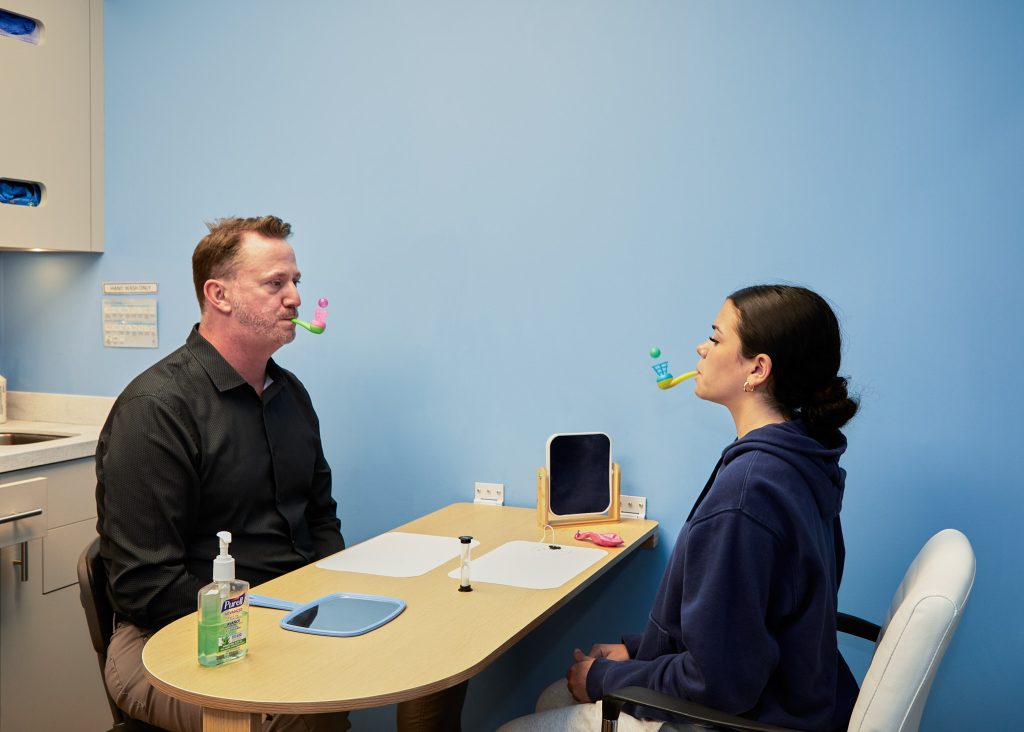
Myofunctional therapy is a structured program of exercises that retrains the tongue, lips, cheeks, and facial muscles. For mouth breathing, the focus is lip seal, tongue posture, oral awareness, and nasal breathing habits where appropriate.
Your plan may include guided exercises, home practice, follow-up visits, and progress checks. If we see signs of nasal obstruction or another medical concern, we’ll point you toward the right provider before therapy goes further. You can read more about how myofunctional therapy works.
Therapy Focus Areas:
- Lip seal and resting posture
- Tongue position and oral awareness
- Swallowing and muscle coordination
- Breathing habit support
- Referral guidance when needed

What to Expect
Therapy begins with an in-person myofunctional therapy assessment. During the assessment, we take the time to look at symptoms, oral habits, tongue posture, lip seal, breathing, swallowing, and muscle function.
Afterwards, we walk through what we found and whether therapy is appropriate. If it is, we build a practical plan around exercises, home practice, and follow-up visits that fit your routine.
Assessment Flow:
- Review Concerns
- Check Oral Function
- Explain Findings
- Build a Plan
Our Services
Teeth Cleaning
Scaling, polishing, and oral health assessment.
Myofunctional Therapy
Personal therapy to support proper breathing, tongue posture, and oral function.
Teeth Whitening
Professional whitening with guidance throughout your treatment.
Tongue-Tie & Myofunctional Therapy
Myofunctional therapy before and after a tongue-tie release to support oral function and recovery.
Snoring & Sleep Apnea Support
Myofunctional therapy to complement your physician’s treatment plan and support better oral function.
Frequently Asked Questions
What causes mouth breathing?
Mouth breathing can be associated with breathing habits, tongue posture, nasal obstruction, or a combination of factors. We assess oral function and direct you to the right provider when a medical review is needed.
Can myofunctional therapy help with mouth breathing?
It can support better lip seal, tongue posture, oral awareness, and breathing-related habits where appropriate. Results vary from person to person.
Do you diagnose airway problems?
No. We assess oral muscle function and breathing habits. Diagnosis of airway or medical conditions stays with a physician, ENT, or sleep specialist.
Is mouth breathing common in children?
It’s often seen in children, particularly during sleep and quiet concentration. Regular open-mouth posture, snoring, or restless sleep is worth having checked.
Can adults get support for mouth breathing?
Yes. Adults come to us with dry mouth, tongue posture concerns, jaw tension, swallowing patterns, and teeth that have shifted after braces.
What is the first step?
An in-person myofunctional therapy assessment. You can contact the clinic to ask about booking an assessment and the next steps.
Ready to Check Mouth Breathing Concerns?
If your child is experiencing signs of mouth breathing, an in-person myofunctional therapy assessment can help identify oral function and breathing patterns that may need attention. We’ll explain our findings and discuss whether therapy is an appropriate next step.
Talk To Us
(416) 233-1286